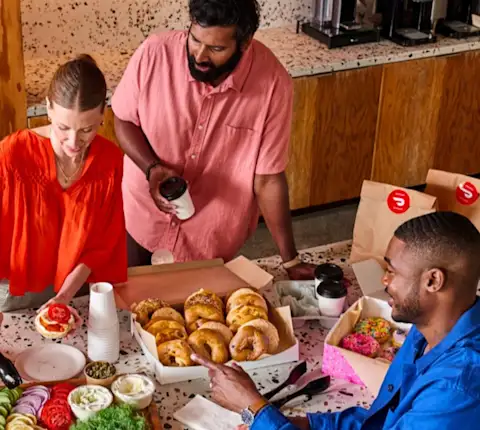
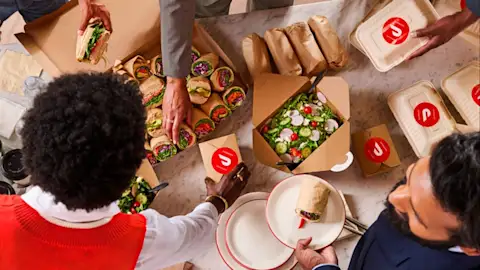
More than 70% of employees say their mental health improves when their company provides meal benefits. A perk as simple as food has a measurable impact on how people feel about their jobs. Not a wellness initiative. Appreciation in action.
What used to be a once-a-year gesture has quietly become an expectation. Employees want to see appreciation built into how a company operates, not pulled out on special occasions.
Here's what appreciation looks like in 2026, and what you can do about it.
Employee appreciation is no longer optional
Not long ago, employee appreciation lived inside an "employee perks program." Office snacks, occasional gift cards, maybe a team lunch once a quarter. Nice-to-have? Sure. Expected? Not really.
That's changed. Almost three-quarters of American workers say benefits matter as much as, or more than, salary when evaluating a job offer. Many will turn down a role if the benefits package doesn't hold up.
Top talent isn't just looking at pay anymore. They're evaluating whether basic support is part of the deal. That changes what appreciation needs to look like: not occasional gestures, but consistent signals that employees are genuinely valued.

What employees actually expect in 2026
Modern employee appreciation comes down to three things: consistency, flexibility, and real support.
1. Consistency over one-time gestures
A big appreciation event is great. But if that's the only moment of recognition all year, it lands hollow.
Gallup found that employees who strongly agree they receive authentic recognition are four times more likely to feel connected to company culture, and seven times more likely to say they're treated with respect.
Regular appreciation doesn't have to be elaborate. Monthly team lunches, meal credits during busy seasons, acknowledging milestones when they happen: small, consistent signals add up. And they feel genuine rather than performative, which is the whole point.
2. Personalization and flexibility
Teams are spread across cities, states, sometimes countries. Some work in-office. Many don't. A one-size-fits-all approach doesn't hold up anymore.
Flexible meal solutions are one example. Instead of a single catered lunch at HQ, employees can access food wherever they're working: at home, in a coworking space, in the office. It's a small thing. But it sends a clear message: "We see you, wherever you work."
3. Support that reduces daily friction
Fewer logistical headaches, less mental load, more room to focus. That's what real support looks like.
According to 2023 data from the American Psychological Association, 92% of workers say it's very or somewhat important to work for an organization that values their emotional and psychological well-being.
Food might seem like a small lever here, but it's a practical one. It saves time. It reduces stress. It supports focus. And it creates shared moments even when people are spread across locations. Meals during project sprints, food stipends during onboarding weeks, team lunches before a big push: they're not just perks. They're a signal that the company invests in its people day to day.
Employee appreciation ideas worth trying in 2026
Consistency matters more than grand gestures. But consistency still requires a plan. Here are ideas organized by category, so you can find what fits your team, your budget, and how your people actually work.
1. Recognition ideas (low cost, high impact)
Recognition doesn't need a budget line. It needs intention.
Public shout-outs are a good place to start. A 30-second call-out in a team meeting. A dedicated Slack channel where wins get posted. It costs nothing. Done consistently, it builds a culture where people feel seen.
Other ideas that work without much spend:
Peer-to-peer recognition programs where teammates nominate each other
Employee spotlights in a newsletter or on a team intranet
Acknowledging personal milestones: work anniversaries, promotions, big life moments
Here's a number worth sitting with: Gallup's 2024 research found that only 22% of employees say they receive the right amount of recognition. That's not a budget problem. It's a habit problem, and it means there's more room to improve here than most leaders realize.
2. Food and meal-based appreciation
Food works as an appreciation tool because it's immediate and shared. It doesn't feel transactional. And it scales: a team of five or a team of five hundred, the approach holds.
Shared team meals, whether in the office or via delivery across locations
Employee gift cards that let people choose where and what to eat
Meal perks during high-pressure seasons: project launches, quarterly closes, onboarding weeks
Celebratory dinners for hitting a milestone or closing a big deal
Surprise deliveries to remote workers during a tough week
The DoorDash for Business research report found that 72% of employees say their mental health improves when meal benefits are provided. And 85% of those employees say they feel more appreciated at work.
3. Experience-based appreciation
Memorable experiences tend to leave a stronger impression than physical gifts. A few that hold up:
Learning stipends: a course, certification, or conference tied to someone's growth goals
Wellness benefits: gym memberships, mental health apps, or a no-questions-asked personal day
Team outings: cooking classes, escape rooms, trivia nights, volunteer days
"Choice day" PTO: an extra day off for anything, no justification needed
Career-focused one-on-ones with managers, not project check-in.
4. Gift-based appreciation
When you want something tangible, the best options are either useful or personal. Not generic branded swag that ends up in a drawer.
One-time meal vouchers for a special occasion or a demanding week
Personalized gifts based on known interests: books, hobby supplies, a local experience
Charitable donations in an employee's name, which works well for people who prefer impact over things
Quality company swag: quality being the key word; cheap swag sends the wrong signal
5. Remote and hybrid-friendly ideas
Remote employees deserve the same quality of appreciation as in-office teams. The logistics just look different.
Virtual team lunches: everyone orders delivery, eats on camera, no work agenda
Group orders that let distributed teams share a meal moment across locations
Digital recognition boards where teammates leave public notes throughout the year
Care packages sent to home addresses
Virtual workshops led by an outside speaker or an internal expert
Does employee appreciation impact business results?
Short answer: yes. And the data is specific enough to be useful.
A 2024 Gallup and Workhuman longitudinal study found that employees who receive high-quality recognition are 45% less likely to leave within two years. For a 10,000-person company, that translates to up to $16.1 million saved annually in turnover costs alone.
The productivity case holds up too. Research from the University of Oxford puts happy employees at 13% more productive than discontented ones. Deloitte found that engagement, productivity, and performance are 14% higher in companies with structured recognition programs than in those without.
Here's the thing, though: the gap between what employees want and what they're getting is still wide. Only 22% say they receive the right amount of recognition. And 81% of managers don't treat it as a strategic priority. The data is clear. The practice hasn't caught up.
Closing that gap pays off in ways that don't always show up in a retention dashboard. Great Place To Work found that recognized employees are 2.2x more likely to drive innovation. That's a business outcome, not just a culture metric.
Building an employee appreciation program that actually sticks
A one-off appreciation event is a start. The companies seeing real results are the ones that treat appreciation as an operating principle, not a date on the calendar.
A few things that matter more than most leaders expect:
Start with frequency, not size. Small, regular recognition beats infrequent grand gestures. Gallup recommends meaningful recognition at least once every seven days. That's not a formal award each week: it means managers build acknowledgment into everyday interactions.
Mix formal and informal. Structured programs (peer nominations, employee spotlights) create consistency. Informal moments (a surprise team lunch, a specific thank-you note) create authenticity. You need both. Each does something the other can't.
Include remote employees by design, not as an afterthought. If your appreciation efforts only work in-office, a big portion of your team isn't receiving them. Build remote-compatible options in from the start.
Measure more than engagement scores. Track retention rates, participation in recognition programs, manager behavior over time. What doesn't get measured tends not to get sustained.
Rethinking employee appreciation in 2026
Whether employee appreciation matters is settled. The real question is whether it's happening consistently, or only when it's convenient.
Most companies have more room to improve than they realize. The gap is measurable. It has a cost. But closing it doesn't require a budget overhaul. It requires building appreciation into how managers operate every week, and giving them tools that make it easier to do consistently.
Learn more about how DoorDash for Business helps teams make employee appreciation part of the everyday work experience.
Frequently asked questions about employee appreciation
What are good employee appreciation gift ideas?
Personal and immediately useful tend to win. Food-based options like meal credits, gift cards, or a shared team lunch consistently rank well because they're usable right away and feel genuinely generous. Learning stipends, wellness benefits, or an extra day off also land well.
How do you show employee appreciation on a budget?
Specific, regular recognition costs nothing and often means more than a one-time gift. A handwritten note with a real detail, a public shout-out in a meeting, or a peer nomination program can drive more engagement than an annual award ceremony. If there's a small budget to work with, food is typically one of the higher-return options: it's shared, immediate, and works for teams of any size.
How often should you recognize employees?
Gallup says at least once every seven days. That doesn't mean a formal program each week. A "good work on that" in a one-on-one, a Slack shout-out, a note after a hard project: all of it counts. Frequency matters more than formality.
What's the difference between employee recognition and employee appreciation?
Recognition is about specific contributions: hitting a target, solving a hard problem, leading a successful project. Appreciation is broader. It's the ongoing signal that someone is valued as a person, not just as a performer. The strongest programs include both, because they meet different needs.
What makes appreciation meaningful versus performative?
Specificity and consistency. Calling out a real behavior feels genuine. Appreciation that only shows up once a year, or that clearly follows a template, feels hollow no matter the budget. Employees who feel most valued typically hear from their managers regularly, not just during review season.