Key Takeaways
Master building logistics: Class A NYC office buildings strictly require a Certificate of Insurance (COI) 48–72 hours in advance and enforce tight 30–60 minute loading dock windows.
Accommodate diverse diets by default: NYC's workforce diversity requires every base catering order to naturally cover vegetarian, vegan, gluten-free, halal, and kosher needs.
Book further in advance: Plan 3–4 weeks ahead for standard corporate orders, and 6–8 weeks for holiday parties or during major city events like Fashion Week.
Choose boxed meals for tight elevators: Individually packaged meals speed up building navigation during narrow freight elevator windows, whereas trays are better suited for large, setup-heavy buffets.
Budget for NYC premium pricing: Local costs run higher than national averages—plan for $18–$28 per person for working lunches and $30–$45+ for client-facing events, while accounting for extra delivery and setup fees.
Planning office catering in New York is different from anywhere else. The city has its own friction — building protocols, a workforce with dietary needs that span practically every tradition, and a restaurant market that moves fast. None of it is unbeatable, but you do need to know what you're dealing with.
This guide covers the things that tend to catch people off guard: the logistics, the dietary math, the timing, and what to budget when the national averages don't apply.
New York City office buildings have their own delivery rules, and your caterer needs to know them
Here's something that trips up first-timers who are looking to order catering in New York: catering can arrive exactly on time and still not make it to the conference room.
In Midtown and the Financial District of New York City, most Class A office buildings require vendors to submit credentials before they're allowed in the building at all. That means a Certificate of Insurance (COI), staff ID, and sometimes vehicle registration need to be sent to building management 48 to 72 hours before delivery day. Skip that step, or work with a caterer who doesn't know it exists, and you're getting a call from the lobby at 12:03 saying they can't come up.
Loading dock access has its own rules on top of that:
Delivery windows are typically 30 to 60 minutes.
They're enforced — there's no "we'll circle the block" option on a busy Tuesday in Midtown.
Freight elevator access during the lunch rush often needs to be booked in advance.
A caterer who's done it before already has a process for all of this. They know which buildings want credentials emailed to the management office versus submitted through a vendor portal. They know what the dock window looks like at Bryant Park versus Hudson Yards.
SoHo and Tribeca operate differently than Midtown, with stricter loading restrictions and, in some buildings, tighter elevator rules. Long Island City and Downtown Brooklyn are different again. So, the first question to ask any new catering vendor is, “Have you delivered to this building before?" The answer may tell you more than the menu does.
New York's workforce is one of the most diverse in the country. Your catering menu needs to reflect that.
Around 38% of New York City's population is foreign-born, according to U.S. Census data. The city also has the largest Muslim metropolitan population in the Western Hemisphere — roughly 1.5 million people in the metro area. More than 800 languages are spoken across the five boroughs.
What that means in practice is, when you're ordering catering for a 50-person team in Midtown, a single order may need to cover kosher, halal, gluten-free, Hindu vegetarian, and several other dietary needs simultaneously as the baseline.
Handling those dietary restrictions one by one can work for a team of 12. A more reliable approach for larger groups is:
Design the menu to cover restrictions by default. Choose restaurants whose menus already have item-level dietary tags — vegetarian, halal, gluten-free — so you can filter before you even pick a vendor.
Serve sauces and dressings on the side. A simple move that makes plenty of dishes work for more people.
Account for the FASTER Act. Since 2023, sesame is a major allergen under U.S. law. It should be labeled, and a good caterer will flag it.
The goal is a menu where nobody has to ask if there's something for them. In a New York office, that bar is higher than most places, so it’s worth planning for up front.
Office catering in NYC books faster than you'd expect
The best catering-capable restaurants in NYC are running corporate orders constantly. Demand is concentrated, especially during periods when many companies are planning events at the same time.
A few windows where lead time actually matters:
Fashion Week (February and September): Media, retail, and PR offices across the city are all ordering simultaneously.
UN General Assembly (late September): Midtown in particular gets compressed.
November through January: The holiday season starts earlier than most people plan for, and the best vendors fill up fast.
For standard corporate events in New York, three to four weeks of lead time give you real options. For a holiday party, company-wide all-hands, or multi-location order, six to eight weeks is more realistic if you want that restaurant you actually want.
That said, not every order needs that runway. For groups of 15 to 30 people with 24 to 48 hours' notice, platforms with schedule-ahead catering options are built for that scenario.
Tray-style or boxed? How the catering format affects delivery in a New York office
This is one of those decisions that feels like a food preference but is actually a logistics question.
Tray-style catering
Tray catering works well for groups of 50 to 100 where there's time to set up before people arrive. Lower cost per head, and it's easier to accommodate a range of appetites. The trade-off is it needs someone to manage the table, and in a New York building with a tight freight elevator window, more trays mean more trips and more time.
Boxed and individually packaged catering
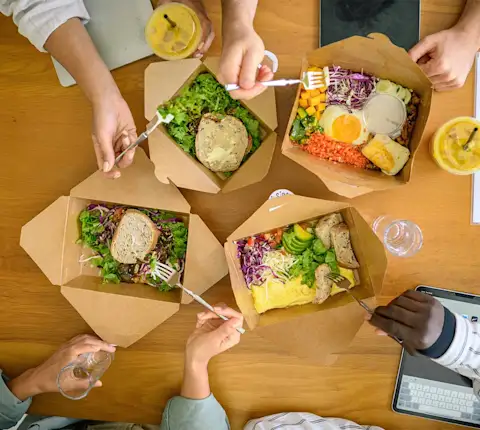
Boxed individual meals are better for groups of 15 to 50, especially when the agenda is tight and people are eating at their desks or in a meeting. Each person gets one portion, dietary needs can be addressed at the individual level, and the delivery is faster to execute. In a building where you have a 25-minute freight elevator window at noon, individually packaged catering is often the right call just on logistics alone.
Mixed catering formats
For larger groups, a hybrid catering option often makes the most sense: trays for sides and shared items, and boxes for the main protein. It keeps costs manageable and makes the delivery easier to coordinate. See our guide to office catering for 20 to 100 people for portion estimates once you've settled on a format.
What to budget for office catering in New York City
The national catering averages you'll find in most guides don't apply here. The local food price index in the NYC metro area was 25% higher in 2024 than in 2019, and Manhattan grocery prices are above the national average. Naturally, catering pricing follows the same direction.
Estimate costs for NYC office catering in 2026:
Occasion | Per-person range |
Office breakfast | $15-$22 |
Working lunch, drop-off | $18-$28 |
All-hands or client-facing event | $30-$45+ |
A few line items that tend to get missed:
Delivery surcharges. Some vendors add these separately. Ask upfront whether the quote is all-in.
Tips. For larger orders with setup and breakdown, it's expected and worth building into your estimate.
Setup fees. In buildings with staffed security floors or limited access, some vendors charge for the additional coordination.
If you're building out an annual catering budget for Finance, our budget planning breakdown covers how to structure cost estimates by occasion type.
Four things to confirm before you book office catering in New York City
Wherever you're ordering from, these are the questions worth asking before anything is confirmed:
Have they delivered to your building — or at least your neighborhood — before? A vendor who knows the building already has the COI, the dock window, and the elevator figured out.
Do their menus have item-level dietary tags? Vegetarian, halal, gluten-free at the item level.
What's their lead time for your group size? A restaurant that does catering as a side business has a different answer than one set up for it.
Is the price quoted all-in? Delivery, service charges, and gratuity should be in the estimate from the start.
DoorDash Catering covers these points operationally: menus are pre-vetted for large-order reliability, dietary filters work at the item level before you pick a restaurant, and there’s also a dedicated team member keeping an eye on your order in real time at no extra cost, helping everything stay on track.
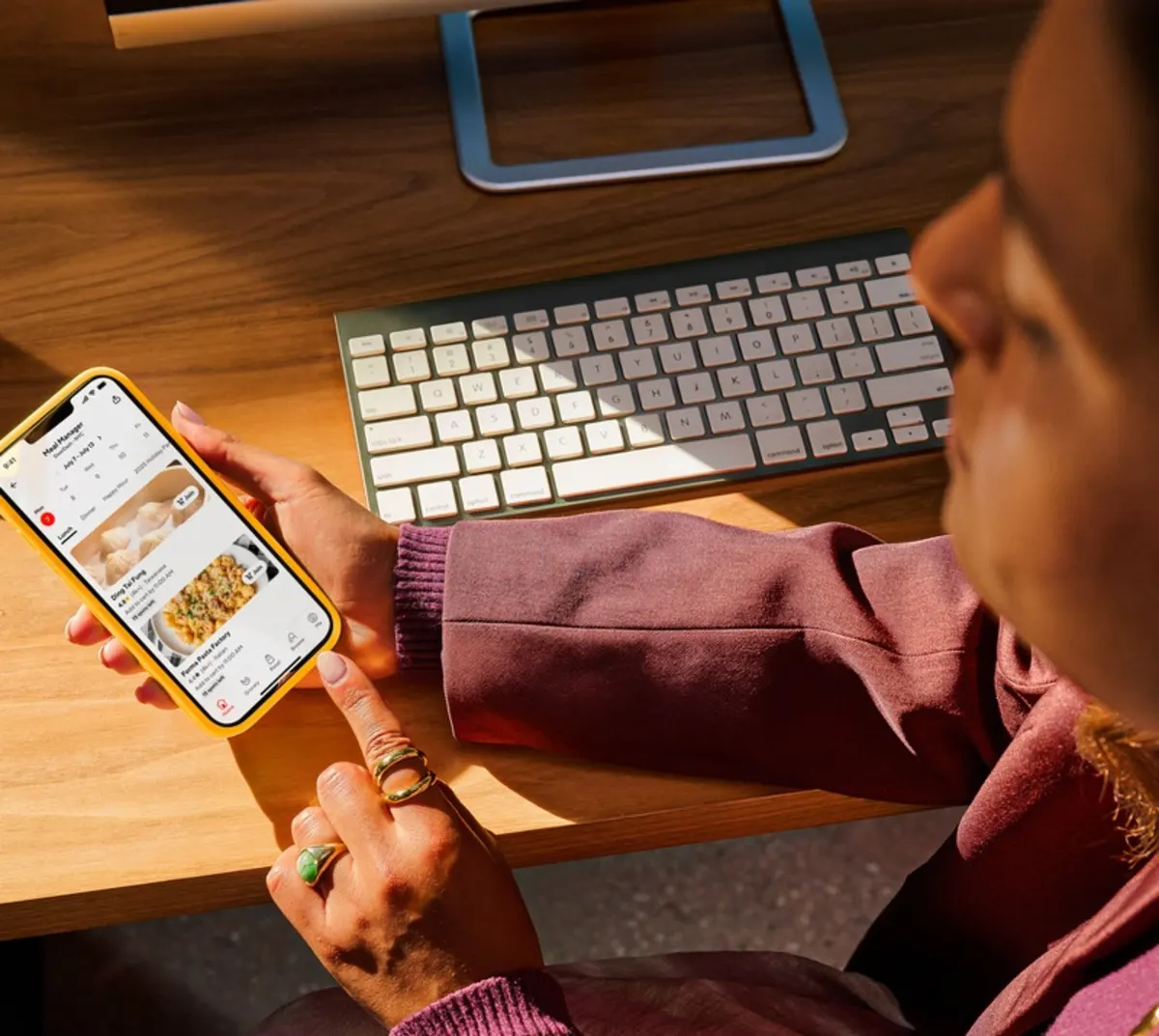
Orders can be placed with schedule-ahead lead times, and you can choose a tray or boxed format depending on what your building and your agenda call for. If something goes wrong and your order arrives 20 or more minutes past the confirmed delivery window, you're eligible for a refund.*
Place your next New York City office catering order with DoorDash
The part that makes catering stressful in New York is everything around it: the building access, the timing, the dietary coverage, the coordination. Get those pieces right and the food order itself is straightforward.
DoorDash Catering handles the logistics so you're not the one making calls the morning of. Your order is monitored by a catering team from placement through delivery, Dashers are trained for large-order drop-offs and can help with setup on request. You get the restaurant confirmed, the dietary filters set, and the format chosen before anything is in motion.
Order catering for your next NYC office event.
Frequently asked questions about office catering in New York City
How far in advance should I order office catering in NYC?
For most events, three to four weeks gives you a solid range of options. For larger events like holiday parties or company-wide all-hands, six to eight weeks is more realistic. For smaller groups of 15 to 30, platforms like DoorDash, with schedule-ahead ordering, can work with 24 to 48 hours' notice.
How much does office catering cost per person in New York City?
Expect $15 to $22 per person for breakfast, $18 to $28 for a working lunch, and $30 to $45 or more for client-facing or all-hands events. These ranges don't include delivery fees, gratuity, or setup charges, which can add several dollars per person depending on the order format.
Do NYC office buildings require a COI for catering delivery?
Most Class A buildings in Midtown and the Financial District do. Vendors typically need to submit a Certificate of Insurance, staff identification, and sometimes vehicle registration to building management 48 to 72 hours before delivery. Loading dock windows are usually 30 to 60 minutes and are enforced.
What dietary options should NYC office catering cover?
At minimum: vegetarian, vegan, gluten-free, and halal. Kosher is common in many corporate environments as well. In a typical NYC office of 40 or more people, planning for these as baseline requirements saves a lot of back-and-forth.
What's the difference between tray-style and boxed catering for NYC offices?
Tray-style works better for larger groups (50 to 100) with time to set up and a relaxed serving format. Boxed meals work better for smaller groups, tight agendas, or buildings where freight elevator access is limited. Each person gets exactly one portion and the delivery is faster to execute.