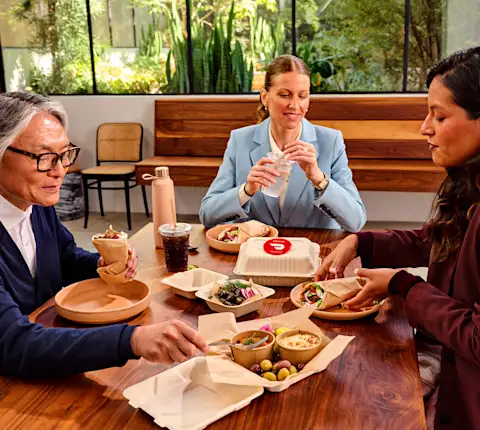
Breakfast catering doesn't get the same attention as an office lunch, but it probably should.
Lunch is the default corporate meal: it's expected, it's planned for, and there's usually some buffer if it runs a few minutes late. Breakfast has no buffer. Everything has to be ready before the first person walks in, which means the logistics are tighter and the margin for error is smaller. Get it right, though, and you've set the tone for the entire day before anyone's opened a single slide.
There's also the timing. Before the agenda, before the Q kickoff presentation, before the new hire has had a chance to figure out where the bathrooms are, breakfast is there, already saying something. That's a real opportunity most offices aren't using.
The 10 ideas below are organized around specific work moments: a Monday coffee ritual, a quarterly kickoff, a training day, a Friday that you actually want people to show up for. Each one calls for a different format and a different vibe. The goal is to make it easy to match the right breakfast to the right occasion.
Breakfast is the most underrated office catering opportunity
Breakfast catering is easy to overlook. An office lunch gets most of the attention, and breakfast usually means bagels picked up at the last minute from somewhere nearby.
But breakfast happens before anything else does. Before the agenda, before the all-hands kicks off, before the new hire figures out where to sit. DoorDash 2026 Workplace Delivery Trends Report found that Thursdays and Fridays generate the highest volume of corporate food orders — a pattern that reflects something admins figured out: anchor food to the moments that matter, and people show up. Breakfast works the same way, just at the start of the day instead of the middle.
10 team breakfast ideas, by work occasion
1. The Monday coffee break
A specialty coffee setup on Monday morning — cold brew on tap, a good batch drip, oat and almond milk included — plus something light to go with it: croissants, fruit cups, a few pastry options. That's it. The format is low-lift, the cost per head is manageable, and doing it on a Monday encourages people to arrive earlier. That 20-minute window before the day gets going becomes something the team actually looks forward to.
2. Build-your-own station for new hire onboarding
During their onboarding days, new employees are absorbing the org chart, the communication channels, and figuring out which bathroom is closer to their desk. A welcome breakfast is a chance to give new hires a reason to move around, make eye contact, and have lighter conversations.
A build-your-own station works here precisely because it's interactive. Some ideas include:
A yogurt parfait bar with granola, fresh fruit, and honey.
An avocado toast station with sourdough, toppings, and a few protein options.
A waffle station if you want to go all in.
The point is that people are standing up, making choices, and doing something with their hands, which is a surprisingly effective social lubricant, especially for someone who doesn't know anyone yet.
3. A themed breakfast spread for the quarterly kickoff
The Q kickoff has its own energy. People are coming off a reset, the new quarter feels like a fresh start, and there's usually a presentation that someone spent way too many hours on. A themed breakfast spread is a way to match that energy before the slides start.
This is where you can get a little more specific with the food. A breakfast taco bar — flour and corn tortillas, scrambled eggs, chorizo, a vegetarian option, pico de gallo, guacamole — lands well for a morning kickoff. So does a brunch-style setup with chilaquiles alongside fresh fruit and coffee. The idea is to pick something with personality.
The themed format also gives each kickoff its own identity. If Q1 is breakfast tacos and Q2 is something different, people start to notice.
4. A brunch station for the all-hands meeting
All-hands breakfasts have the scaling problem of including the whole company. That's where a brunch setup works: multiple options and everyone serving themselves.
The spread can be substantial without being complicated. You can offer:
Eggs benedict in a tray
Smoked salmon with bagels and all the fixings
Mini pancakes with fruit compote
And of course, a coffee and juice station off to the side
These cover most preferences without requiring anyone to have submitted a form.
For hybrid all-hands where part of the team is dialing in, pair the in-office brunch station with meal budgets for remote employees. They order from wherever they are, the company covers it, and the all-hands starts the same way for everyone, not just for the people in the room.
5. Individually boxed meals for training days
Training days are a different context entirely. The goal is not conversation or celebration, but sustained focus over several hours, usually in a room where people are sitting in the same seat most of the day. A build-your-own station would be wasted here. The interaction it creates is exactly what you're trying to minimize.
Boxed meals are the right call. One box per person, complete and ready when they sit down, no decisions required. Ideas include:
A classic breakfast box: scrambled eggs, fresh fruit, a pastry, juice. This one works for most groups.
For teams that skew health-conscious, overnight oats with toppings included travel well and hold up without getting sad by 9am.
A Mediterranean-style box with hummus, pita, cucumber, feta, and fruit is a good option for groups with a mix of dietary needs.
At 15 or more people, assume at least one vegan, one gluten-free, and one nut allergy in the room. Order about 10% more than your confirmed headcount, as there's always someone who didn't RSVP and shows up anyway.
6. Grab-and-go options for high-focus days
Some mornings the team is heads-down from the moment they walk in. Sprint week, a product deadline, or the day before a big client presentation. On those packed days, a full catered breakfast would mostly go unnoticed — people aren't in the mood to stand around a station.
What works instead is a grab-and-go setup: individually packaged options that people can pick up without breaking stride:
Protein boxes with hard-boiled eggs, cheese, nuts, and fruit.
Overnight oats in individual containers.
Breakfast wraps that travel well.
A few pastry options for people who want something quick and familiar.
This format also works well as a supplement to a larger program.
7. A continental spread for client-facing mornings
When there's a client or external executive in the room, the breakfast has to do two things at once: be good, and look like it was planned. A continental spread handles both.
The format has a reputation for being a bit generic — pastries, fruit, coffee, done — but the details can make the difference. For example:
Croissants from a bakery that takes lamination seriously.
Smoked salmon with capers, thinly sliced red onion, cream cheese, and decent bagels.
A small charcuterie addition with good cheese and fruit.
Sparkling water and juice in actual glasses, not plastic cups.
Mini quiches or a savory option for guests who don't eat sweet things in the morning
8. A breakfast burrito bar to celebrate team wins
A project shipping, a strong quarter close, or a promotion, call for something a little more festive than a standard breakfast, and a burrito bar hits that note with little planning.
The format is naturally social. People are standing up, assembling their own food, making comments about whether anyone's going to be brave enough to add the jalapeños. It's informal in a way that fits a work celebration better than a sit-down meal would.
For the spread, include: flour and corn tortillas, scrambled eggs, a meat option and a vegetarian one (black beans work well), shredded cheese, pico de gallo, guacamole, sour cream, hot sauce on the side. It scales cleanly without much adjustment and almost everyone can find something they can have.
One thing that works especially well for celebration breakfasts is letting the team weigh in on the theme or the food ahead of time. It's a low-effort gesture that makes the moment feel less like something just planned by HR.
9. A rotating seasonal menu for monthly team breakfasts
If you're doing a monthly team breakfast, variety is what keeps it from becoming invisible. The first few times, people notice and appreciate it. By month four or five of the same bagel order, it blends into the background.
A seasonal rotation solves this. Map a different menu to each quarter and order ahead in batches.
In summer: açai bowls, chilled fruit cups, iced coffee or cold brew.
In fall: an oatmeal bar with cinnamon, brown sugar, and apple compote, plus hot cider.
In winter: warm oatmeal, banana bread, hot chocolate.
In spring: avocado toast, strawberry yogurt parfait, fresh-squeezed lemonade.
The food changes, the ritual stays the same.
Planning three months of menus at once is significantly less work than planning each one individually. It also gives you better restaurant options because you're not ordering last-minute.
10. The Friday hot buffet
Friday is the hardest day to fill in a hybrid office. A standing hot buffet breakfast changes the math on that.
The format is the most substantial on this list: scrambled eggs with topping options (cheese, herbs, sauteed veggies), a protein choice and a vegetarian alternative, roasted potatoes, fresh fruit, pancakes or French toast, coffee and juice. It's a full breakfast, the kind that requires a table and some time, and that's exactly the point. People plan around it. They come in earlier than they otherwise would. They sit together before the workday technically starts.
Let DoorDash for Business handle your office breakfast catering
The practical reality of running any of these programs is that the logistics can become overwhelming. Tracking down which restaurant does catering-ready formats, checking whether they can handle 40 people, cross-referencing dietary options, following up on the order the morning of… it’s a lot.
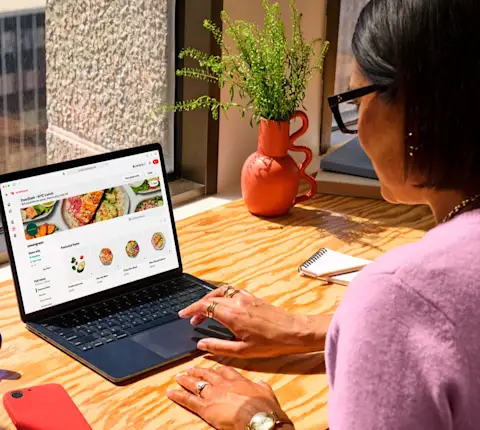
DoorDash for Business handles the coordination layer. The catering-ready restaurant selection is pre-vetted, which means you're not guessing about whether a place can actually execute for your group size. Dietary filters let you screen by vegan, gluten-free, and other tags before you even look at the menu.
For hybrid teams, the same platform that covers the in-office catering also handles meal credits for remote employees, so the perk works the same way for everyone regardless of where they're joining in from.
Ready to get started? Explore DoorDash catering to find catering-ready restaurants near you.