Key Takeaways
Ideal for sharing: Chinese cuisine is built around shared plates, making it naturally suited for budget-friendly, tray-style office buffets with a wide variety of flavors.
Match the menu to the meeting: Order crowd-pleasing trays (sesame chicken, broccoli beef) for team lunches, but switch to elevated dim sum platters or individual bento boxes for high-stakes client meetings.
Order for reheatability on late nights: For evening project sprints, stick to saucy dishes (General Tso's, lo mein) that hold up well in warming trays, and skip fried appetizers that will quickly get soggy.
Watch for hidden allergens: Dietary restrictions require special attention. Gluten hides in standard soy and hoisin sauces, shellfish allergies can be triggered by oyster sauce, and peanut oil is commonly used for frying.
What separates a forgettable Chinese catering order from one people actually enjoy comes down to how you build the menu, especially when you’re staring at 40+ options and trying to make the right call for a group.
What makes Chinese food catering work well for office events
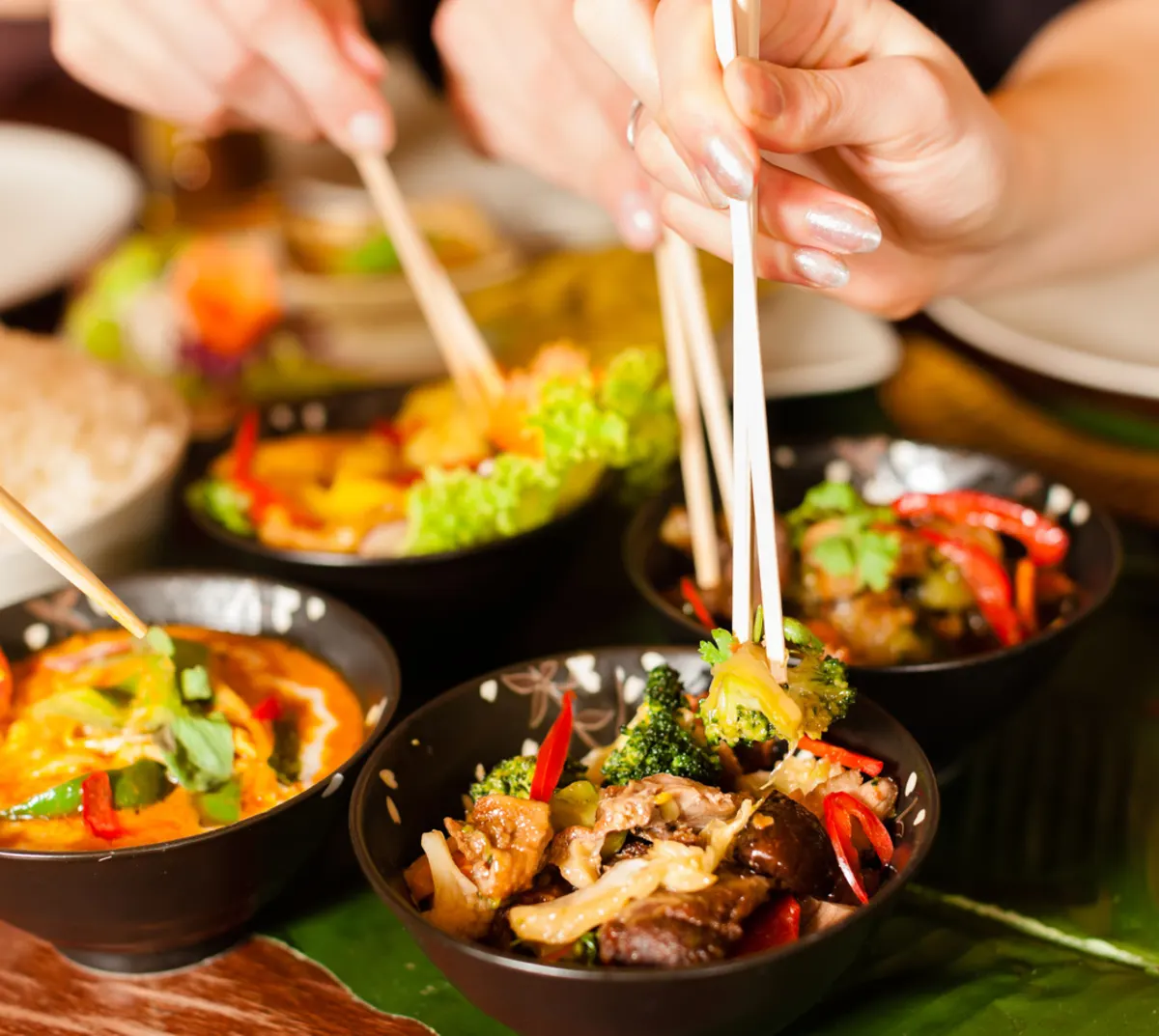
Shared plates are at the heart of Chinese food. That's how it's eaten in most Chinese households and restaurants, and it translates naturally to tray-style catering where people serve themselves.
The regional variety helps too. A single Chinese catering menu might pull from Cantonese, Sichuan, Hunan, and Chinese-American traditions, which means you can cover mild, spicy, sweet, and savory all in one order. That kind of range is harder to get from most other catering cuisines without ordering from multiple restaurants.
Price is the other factor. Chinese catering tends to run lower than Italian or Mexican catering, which gives you room to add an extra dish or two without blowing the budget. If you're also considering broader Asian food catering options like Japanese bento boxes or Thai curry platters, Chinese menus often share enough overlap in flavors and formats (dumplings, stir-fries, noodle dishes) that they work well as part of a mixed order.
How to read a Chinese menu when you're ordering for a group
If you've mostly ordered Chinese food for yourself, a catering menu can feel overwhelming. There are plenty of items, and the categories don't always line up with how you'd think about building a meal for a large group. Breaking the menu into functional categories makes it easier to build an order that covers the table without gaps or too much redundancy.
Appetizers and dim sum are your arrival food. Spring rolls, dumplings, scallion pancakes, crab rangoon. These work well when people are showing up at different times and you need something on the table before the main dishes land. For a seated lunch where everyone eats at the same time, you can skip this category and put that budget toward an extra protein.
Proteins take up the biggest section of any Chinese catering menu, and they should take up the biggest share of your order too.. Options like chicken, beef, pork, shrimp, and tofu help you build a spread that works for different preferences. Plan on at least two proteins per 20 people, and make sure one of them is on the milder side. General Tso's chicken or sesame chicken are reliable for the person who wants something familiar. Then you can pair that with something with a little more character, like kung pao shrimp or Mongolian beef.
Noodles and rice are the base of the meal. Every order needs at least one. Fried rice serves more evenly from a tray than noodles do, because people can scoop it cleanly. Lo mein or chow fun works better when the group is smaller and people are plating their own food with more control. For groups over 30, lean toward rice as your primary starch and add a noodle dish as a second option.
Vegetable dishes are full dishes in Chinese cooking, and they deserve that same treatment on your order. Stir-fried Chinese broccoli, mapo tofu (if you're going vegetarian-friendly), garlic green beans, or sautéed bok choy all hold up well in catering trays. Order at least one vegetable dish per 15–20 people. That gives vegetarian attendees something substantial, and it rounds out the table for everyone else.
If the event is in colder months or you want the spread to feel like a fuller meal, consider adding a soup. Hot and sour, egg drop, and wonton are the three that work best for groups. Keep in mind that soup adds a logistical layer: bowls, ladles, and a spot on the table that won't get bumped.
Building your Chinese food catering order around the type of office event
A 60-person all-hands and a 12-person client lunch are both office events, but the order you'd place for each one should look different. The menu composition, the format, and even how many proteins you include will shift depending on what the event is actually for.
All-hands and team lunches
Go broad and familiar. You want enough variety that people feel like they have choices, but not so many dishes that half of them go untouched.
A solid baseline for a team lunch of 25–40 people:
Two to three proteins (one mild, one with some heat, and one crowd-pleaser like sesame chicken or beef and broccoli)
A fried rice
A lo mein or chow fun
Two vegetable dishes
That spread covers enough ground that people can grab what they want without overthinking it. Tray-style catering works best here. People can move through a line, take what they want, and get back to their seats.
Client-facing meetings and executive lunches
This is where presentation matters more than volume. A client lunch with the wrong food on the table doesn't ruin a deal, but it does send a signal about how much thought went into the details.
Dim sum platters make a strong first impression for groups of 8–15. Dumplings, bao buns, and spring rolls arranged on a tray look intentional in a way that aluminum pans of fried rice don't. Pair that with one standout protein (Peking duck, walnut shrimp, or crispy whole fish if the restaurant offers it) and a clean vegetable dish like garlic Chinese broccoli or sautéed snow peas.
For smaller meetings where you don't want people serving themselves from shared trays, pick a restaurant that offers individually boxed meals. Some Chinese catering restaurants have bento-style boxes that still feel elevated, and they solve the logistics problem of trying to set up a buffet line in a conference room that barely fits the table.
Team celebrations and milestones
A celebration should feel generous. That doesn’t always mean ordering more food; it means building a wider spread with more variety and a few standout dishes. Add a dim sum appetizer spread for people to graze on while they arrive, throw in a dessert option (sesame balls, mango pudding, or egg tarts if the restaurant carries them), and lean into a couple of dishes that feel a little more adventurous than the usual lineup.
This is a good time to include a Sichuan or Hunan dish for the spice enthusiasts on the team, alongside the safer options. Salt and pepper shrimp, mapo tofu, or dan dan noodles give the table some personality. Keep the ratio at roughly one bold dish for every two familiar ones, so nobody's stuck with nothing they recognize.
Late-night working sessions and project sprints
According to DoorDash’s Workplace Meal Trends Report, 62% of AI startup workplace orders come in after 6 p.m., and banking and pharma aren't far behind. If your team pulls late nights regularly, the food you order for an 8 p.m. work session needs to be different from what you'd get for a noon lunch.
Comfort and reheatability are what count here. Lo mein, fried rice, and dumplings hold up well over a couple of hours. Saucy dishes like General Tso's chicken or kung pao stay good in a warming tray longer than anything crispy or battered. Skip the spring rolls and anything fried as an appetizer. They'll be soggy by the time the second wave of people takes a break to eat.
Keep the order simpler than you would for a daytime event. Two proteins, one noodle or rice dish, and one vegetable are plenty. People working late want to grab a plate and get back to what they're doing. They're not lingering at the table.
Dietary restrictions to check before you order Chinese food catering

Chinese food is more dietary-friendly than people give it credit for, but there are a few ingredients that show up in places you might not expect. Flagging these with the restaurant before you order saves you from finding out at the table.
Soy is in almost everything. Sauces, marinades, and dipping condiments. If someone on your team has a soy allergy, you need to tell the restaurant directly, because it's not always listed on the menu as a separate ingredient.
Gluten hides in soy sauce, oyster sauce, hoisin sauce, and anything battered or fried. Some restaurants offer gluten-free soy sauce as a substitute, but you have to ask. It's not usually the default.
Shellfish can appear in sauces even when the dish itself doesn't contain shellfish. Oyster sauce is the most common example. Shrimp paste shows up in some Sichuan and Cantonese dishes too. If someone has a shellfish allergy, check the sauces, not just the listed proteins.
Nuts are straightforward to spot in dishes like cashew chicken, walnut shrimp, and anything with peanut sauce. The less obvious risk is peanut oil, which many Chinese kitchens use for frying. Worth asking.
Vegetarian and vegan options are plentiful. Tofu dishes, stir-fried vegetables, vegetable dumplings, and Buddhist-style dishes (which traditionally avoid all animal products) are standard on most catering menus. Cross-contamination is common, especially if the kitchen uses a shared wok. If someone on your team is strictly vegan, mention it when you place the order so the restaurant can plan around it.
What to confirm before you place a Chinese food catering order
A few quick things to check with the restaurant before you finalize the order:
Lead time: most Chinese catering restaurants need 24–48 hours for large orders, and popular spots book up on Fridays.
How many people each tray actually feeds (because “serves 10” varies wildly between restaurants).
If the order includes serving utensils, plates, and napkins, or if you need to supply those yourself.
Temperature: Chinese food cools quickly and changes texture when it sits out. If there's going to be more than 30 minutes between delivery and when people eat, ask about chafing dishes or sterno options to keep everything warm.
Place your next Chinese food catering order with DoorDash
DoorDash connects you with local Chinese restaurants that offer catering-size menus with dietary filters and tray-size details. Explore catering restaurants near you to start building your next order.
Frequently Asked Questions (FAQs)
What are the best Chinese food dishes to order for office catering?
For a balanced and crowd-pleasing office spread, include a mix of mild and bold proteins (such as Sesame Chicken and Kung Pao Shrimp), a versatile starch (fried rice is easiest to serve to large groups), and at least one hearty vegetable dish (like garlic green beans or mapo tofu) for every 15-20 people. If you are hosting a client-facing event, elevate the experience by adding dim sum platters or spring rolls as arrival food.
How do you handle dietary restrictions with Chinese food catering?
While Chinese catering menus offer plenty of excellent vegetarian and vegan options, you must be vigilant about hidden ingredients. Gluten is heavily prevalent in standard soy sauce and marinades, shellfish allergies can be triggered by oyster sauce, and peanut oil is commonly used across the kitchen. Always communicate strict allergies directly to the restaurant to ensure they use gluten-free soy sauce and prevent wok cross-contamination.
How much Chinese food should I order for a corporate event?
A solid baseline for a team of 25–40 people is two to three proteins (balancing mild, spicy, and familiar flavors), one large tray of fried rice, one noodle dish, and two vegetable dishes. Because a "catering tray" can mean very different things depending on the restaurant, always explicitly ask the caterer how many people their specific trays feed before finalizing your math.
What is the best catering food for teams working late-night shifts?
For late-night project sprints, Chinese food is an excellent choice because it offers great comfort and reheatability. Saucy dishes like General Tso's chicken, mapo tofu, and fried rice hold their temperature and texture exceptionally well over several hours in a warming tray. When ordering for late nights, keep the menu simple and avoid ordering crispy or deep-fried appetizers (like egg rolls), as they will quickly become soggy.


