Key takeaways
As vacation season winds down and Summer Fridays end, returning to a full workload can feel jarring. A Glassdoor survey found that 77% of professionals feel anxious anticipating their post-vacation workload.
Decision fatigue drives more of the post-summer slump than workload does. Disrupted routines and skipped lunch breaks stack up faster than the actual backlog.
Small structure —not a program overhaul— gets teams back on track fastest. Time-blocking, a protected lunch break, and a restarted meal program can make the transition feel more manageable.
September is a real inflection point. DoorDash's own 2026 Workplace Meal Trends Report found large workplace orders jump 30% in September, right as teams settle into post-summer routines.
DoorDash for Business gives managers the tools to act on this (Group Orders, Meal Manager, Meal Budgets, and Catering) without rebuilding the routine from scratch.
Why the post-summer blues hit so hard
Returning to work after any stretch of time off asks the brain to switch gears quickly. After weeks of loose schedules, a full inbox and a packed calendar ask for dozens of small decisions all at once, and that mental load adds up fast.
The same pattern shows up outside the holidays, too. Coming back to work after any break, whether it's a summer vacation, a long weekend, or a slower August, can trigger the same feeling of being unmoored. Employees can feel overwhelmed before they've even opened their first email, and if left unaddressed, that feeling can tip into burnout over the following weeks.
While serious burnout requires official company support resources, the typical post-vacation adjustment usually lifts quickly once clean, low-stress routines are back in place.
6 ways to help your team ease back into work mode
1. Rebuild the calendar with time-blocking
Don't let the first week back turn into an unstructured scramble. Encourage managers to protect a few hours of focus time using time-blocking, so employees aren't pulled into six meetings before they've caught up on what they missed.
A lighter first-week schedule goes a long way toward getting back into a routine without feeling behind from day one.
2. Protect the lunch break
It's tempting to eat at your desk while clearing out a backlog, but skipping lunch is one of the fastest ways to burn out a team that's already running low on reserves. Treat lunch as non-negotiable for at least the first week back, and make it count: a shared meal, even an informal one, helps people reconnect before diving back into deadlines in a way that eating alone at a desk never will.
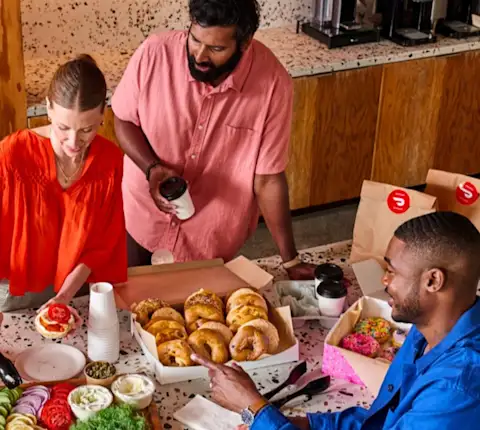
Make it easy by scheduling a group order for that first Monday or Tuesday, letting everyone pick their own meal from one shared cart instead of coordinating five separate orders or skipping lunch altogether.
3. Rehydrate and refuel, literally
Hydration is easy to overlook, but it's one of the biggest levers for getting back into work mode. Stock the break room with water and encourage short walk breaks between meetings. Pair that with meals that actually include vegetables and protein instead of the vending machine defaults, and the energy difference shows up by mid-afternoon.
4. Cut decision fatigue out of mealtime
If your team came back to work and immediately faced a dozen small decisions before lunch even happens, that's decision fatigue stacking on top of an already full plate.
Removing lunch from that list of decisions is one of the highest-leverage changes you can make in the first week back. A recurring meal budget covers a set amount so employees can order what they want without a new decision every day, while Meal Manager sets up a standing weekly meal that arrives at a set time everyday. . Either way, or whatever removes the most friction for your team, the point is the same: one less thing on an already full plate.
5. Automate the routine so it sticks
The habits that help most are the ones nobody has to think about twice. Rather than manually organizing meals every week, admins can automate their team's meal calendar so recurring lunches, snack days, or welcome-back meals happen on autopilot. That's one less recurring task competing for your attention during an already busy reset.
6. Give people a reason to look forward to the office
If your team has been fully remote or scattered over the summer, a one-time perk can make returning feel less like an obligation and more like an event. A voucher for a specific day works well here. Employers can send a one-time voucher ahead of a big return-to-office day so the meal feels like a genuine welcome back rather than an afterthought.
Fall employee engagement ideas to try this season
The back-to-work stretch isn't only about routine, it's also a natural moment to bring the team back together after a summer of scattered schedules and PTO. These ideas do double duty: they rebuild connection, and most of them run on food your team already looks forward to.
Idea | Effort Level | Best For |
Tailgate lunch or mini Oktoberfest spread | Low–Medium | Any size team |
Fall potluck or chili cook-off | Low | Teams that like informal competition |
Fall comfort-food recipe exchange | Low | Remote or hybrid teams |
Pumpkin decorating or costume contest | Low | Company-wide visibility |
Midday foliage walk or outdoor break | Low | A low-cost wellness moment |
Here's how to put the food-centric ones into practice.
Tailgate Lunch or Mini Oktoberfest Spread
A tailgate-style lunch —grilled classics, pretzels, cider— is an easy way to mark the first big week back without asking anyone to cook. Catering handles the ordering and setup so no one on the team has to run point.
Fall Potluck or Chili Cook-Off
A chili cook-off adds friendly competition to a shared meal and costs next to nothing to run. If you'd rather not ask people to cook, a Group Order lets each person pick their own meal from one shared cart instead.
Fall Comfort-Food Recipe Exchange
For hybrid or remote teams, a dedicated Slack channel for sharing seasonal recipes keeps the spirit of the season alive without requiring everyone in the same room. Pair it with a Meal Voucher so remote employees can order the dish someone just recommended.
Pumpkin Decorating or Costume Contest
Low-cost, high-visibility, and easy to run company-wide — provide the supplies, set a judging window, and let the team vote.
Why September is the right time to relaunch your meal program
Meal programs tend to loosen up over summer. Fewer people in the office, more PTO, and lighter schedules all mean less structure around when and how your team eats together. Restarting that program deliberately, rather than letting it drift back into shape on its own, is one of the most direct ways to reduce stress during the transition.
The data backs this up: DoorDash's own 2026 Workplace Meal Trends Report, which analyzed 2025 orders from more than 700 companies across 4,800-plus offices, found that large workplace orders peak in key planning months, including September, right as teams settle back into post-summer routines.
That timing lines up closely with when the back-to-work blues tend to hit hardest, which makes early September a natural moment to relaunch your meal program rather than wait for it to happen on its own.
There's also a business case beyond morale. A ResumeBuilder survey of nearly 1,000 business leaders found that among companies offering any return-to-office incentive at all, catered meals rank as one of the most common, alongside commuter support. If your organization is asking people to spend more days in the office this fall, a well-run meal program is one of the more direct ways to make that ask land better.
How DoorDash for Business helps your team reset
If you're the one juggling the calendar, the budget, and the "why isn't lunch sorted yet" questions every season, you already know the real problem isn't the back-to-work blues themselves. It's rebuilding the meal routine from scratch every time the office fills back up —and that's exactly what these tools are built to remove.
Group Orders for the welcome-back lunch
Schedule a group order for the team's first week back and let everyone pick their own meal from one shared cart, so you do not coordinate five separate orders or guess who wants what.
Recurring lunches to cut decision fatigue
Set a recurring meal budget that covers a set amount each day or week, or set up a Meal Manager for a recurring meal program, so lunch stops being one more decision on an already full plate.
Catering for a bigger reset moment
For a tailgate lunch, a welcome-back event, or anything bigger than a standing order, Catering handles a group meal without anyone on your team having to organize their own party.
Turning this into an ongoing habit
Admins can automate the team's meal calendar so recurring lunches, snack days, or welcome-back meals happen on autopilot —one setup instead of a weekly task.
Beyond the first week back: keeping the routine going
The back-to-work blues aren’t limited to September—they can surface whenever teams return from time away. Building meals into your team’s regular routine, rather than restarting the program after every slow season, can make those transitions smoother.
Get started with DoorDash for Business and have your team's meal program running before the next slow season hits.
Frequently asked questions
What are the back-to-work blues?
The back-to-work blues describe the low mood, low energy, and mild dread that show up when returning to work after a vacation, a long weekend, or any stretch of time off. It's driven mostly by decision fatigue and the sudden shift from unstructured time back into work mode, and for most people it fades within a few days.
How long do the back-to-work blues typically last?
For most employees, the slump lifts within three to five working days as routines rebuild and the backlog clears. If someone on your team still feels overwhelmed or noticeably less productive well past that window, it's worth checking in directly rather than assuming it will pass on its own.
Are the back-to-work blues the same as post-holiday blues?
They're closely related. Post-holiday blues usually refer to the version people feel returning after the December holidays specifically, while back-to-work blues can show up after any break, including the end of summer. The underlying cause, an abrupt return to routine and decision-making, is the same either way.
How can employers help employees ease back into work after summer?
The most effective approach combines structure and food. Lighter first-week schedules, protected lunch breaks, hydration reminders, and a restarted team meal program all reduce stress without requiring a big program overhaul. Automating recurring meals also means admins aren't rebuilding the routine by hand every time the season changes.
Is this the same as burnout?
No. The back-to-work blues are short-term —usually gone within a week as routines rebuild. Burnout builds over weeks or months and doesn't resolve on its own once the first week back is over. If low energy or disengagement persists well past the first couple of weeks, treat it as a signal to loop in your EAP or mental health benefits rather than something a lighter schedule or a team lunch can fix.